There's a short film called Nuggets, by Andreas Hykade, that I send to people who don't understand why someone can't just stop. It has never once needed explaining afterward.
It's the story of a Kiwi who stumbles across a "nugget", a metaphor for destructive behaviors. And then repeatedly slurps nuggets down, and floats off without a care in the world in a state of absolute bliss... only to come crashing down moments later, devastated.
Consider the Kiwi
This innocent character, we'll refer to as "Kiwi", starts with a bouncy trot that says "I don't have a care in the world".
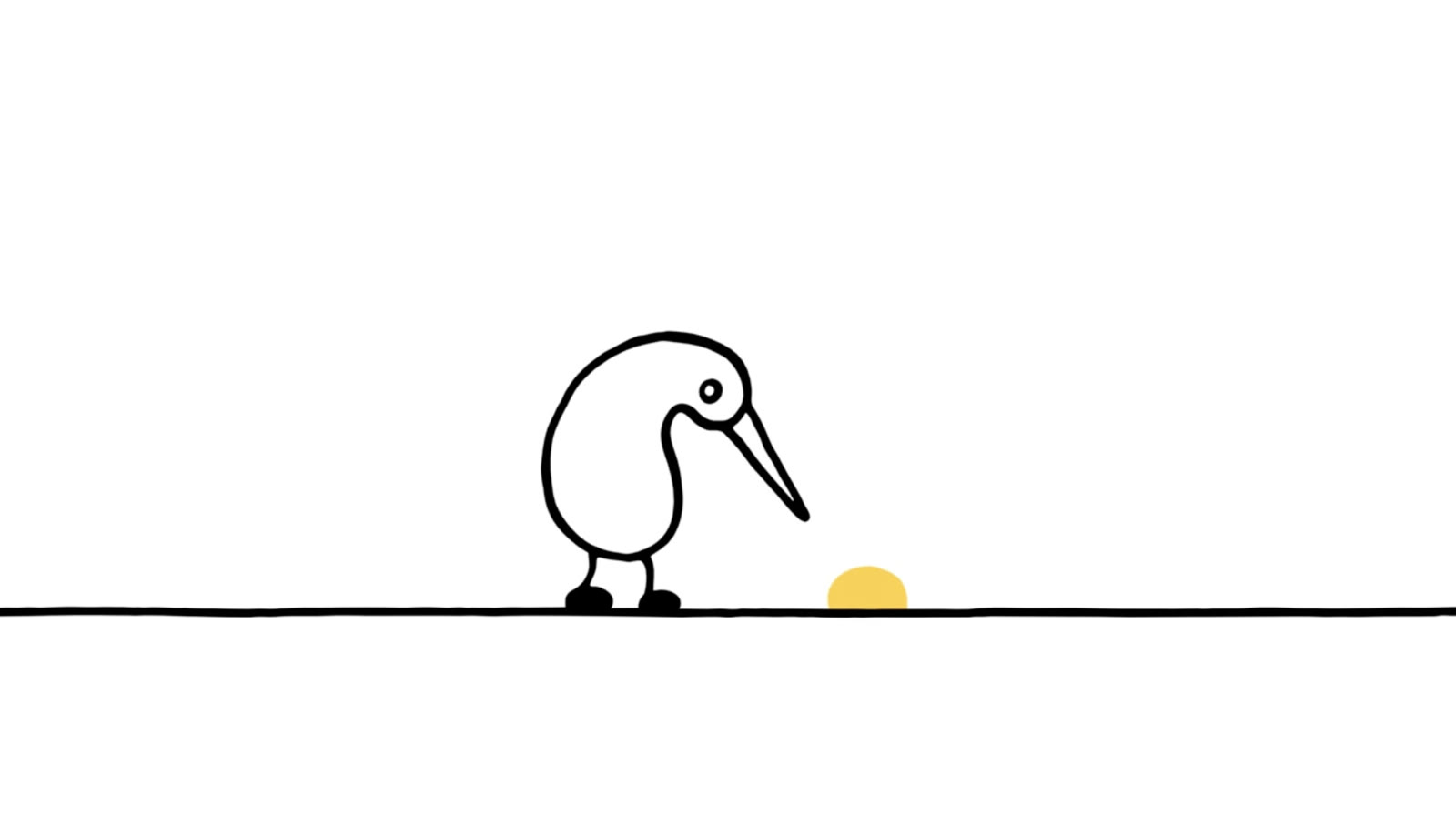
This is the only place the film lies a little, and it lies in our favor. As far as we know Kiwi has no reason to feel pain. Most people do. For most there's usually already something they'd rather not be sitting with: a stretch of loneliness, a job that's eating them, a home that's chaos, a quiet file of evidence that they're falling short. It rarely looks dramatic from outside.
What arrives first is never the substance or an app, it's the pain in-situ that the person lives with. That's what the "nugget" satisfies.
That Curious First Nugget
At first Kiwi drinks, lifts triumphantly from the ground, and floats through space as though he is a master of his universe.
Thirty seconds of bliss is enough to change Kiwi forever.
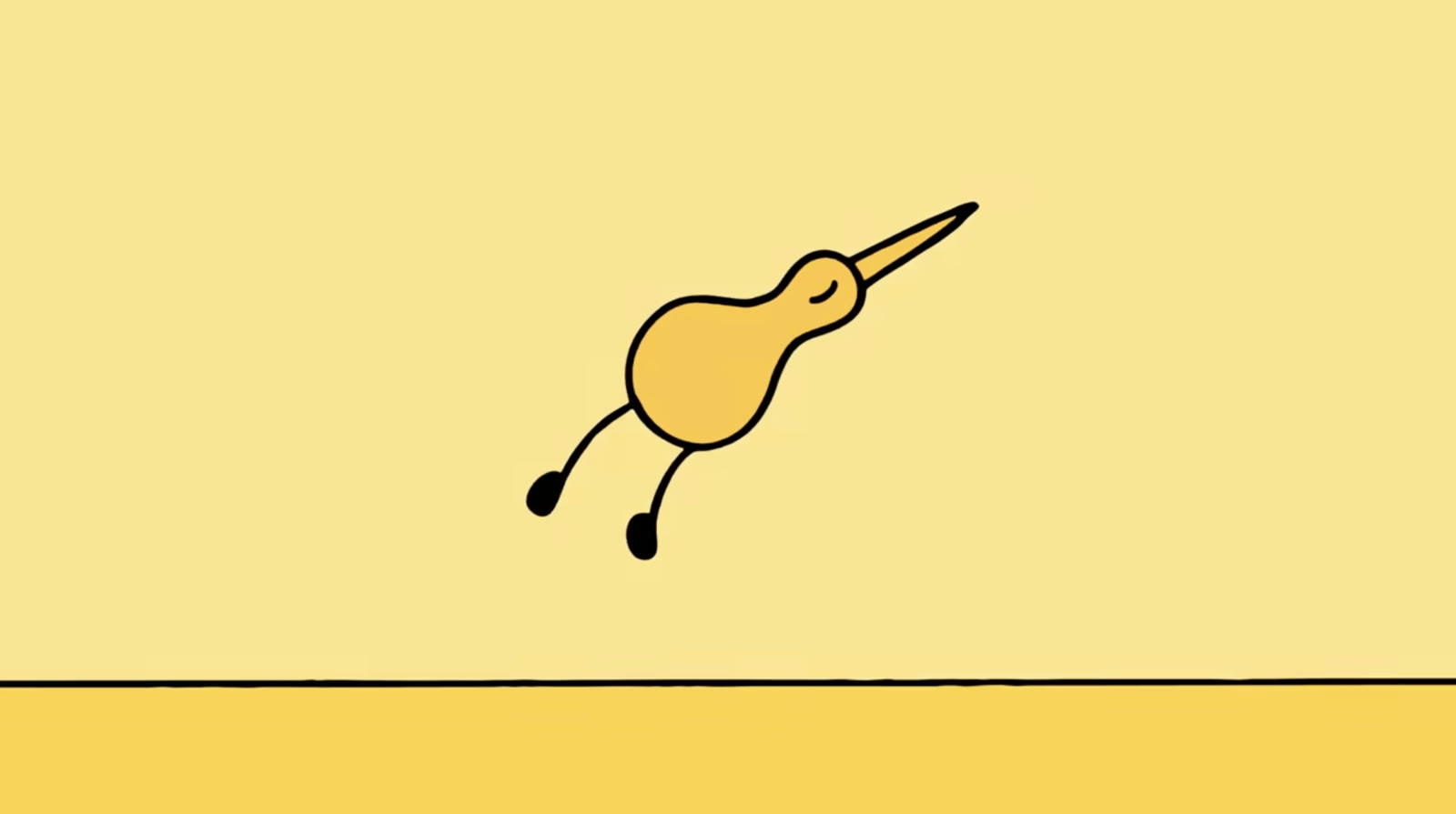
The film is honest about this in a way most warnings aren't, and it's why the film works and the warnings don't. Whatever it is for you, the first time it feels amazing, and you can't get enough.
The brain runs on surprise. When something pays out far beyond what was expected, dopamine doesn't just mark the moment as good, it flags the entire route that led there as worth repeating. Where you were, who you were with, the time of day, what you were feeling beforehand. All of it gets filed as directions.
The Nugget Habit
For a stretch, Kiwi is fine. It walks, it finds one, it flies, it comes back down, it carries on. There's no visible cost yet.
Real life gets this stretch too, and it can run for years. Which is why why didn't you stop sooner is such an unfair question. For a long time there was nothing to stop.
Fall from Grace
This is the hinge of the film, and it happens gradually enough that you almost miss it. Kiwi gets darker. Its walk goes wrong. And the moments of bliss get smaller, until they get him almost nowhere. Now with more resolve, Kiwi goes after each new nugget harder than the last.
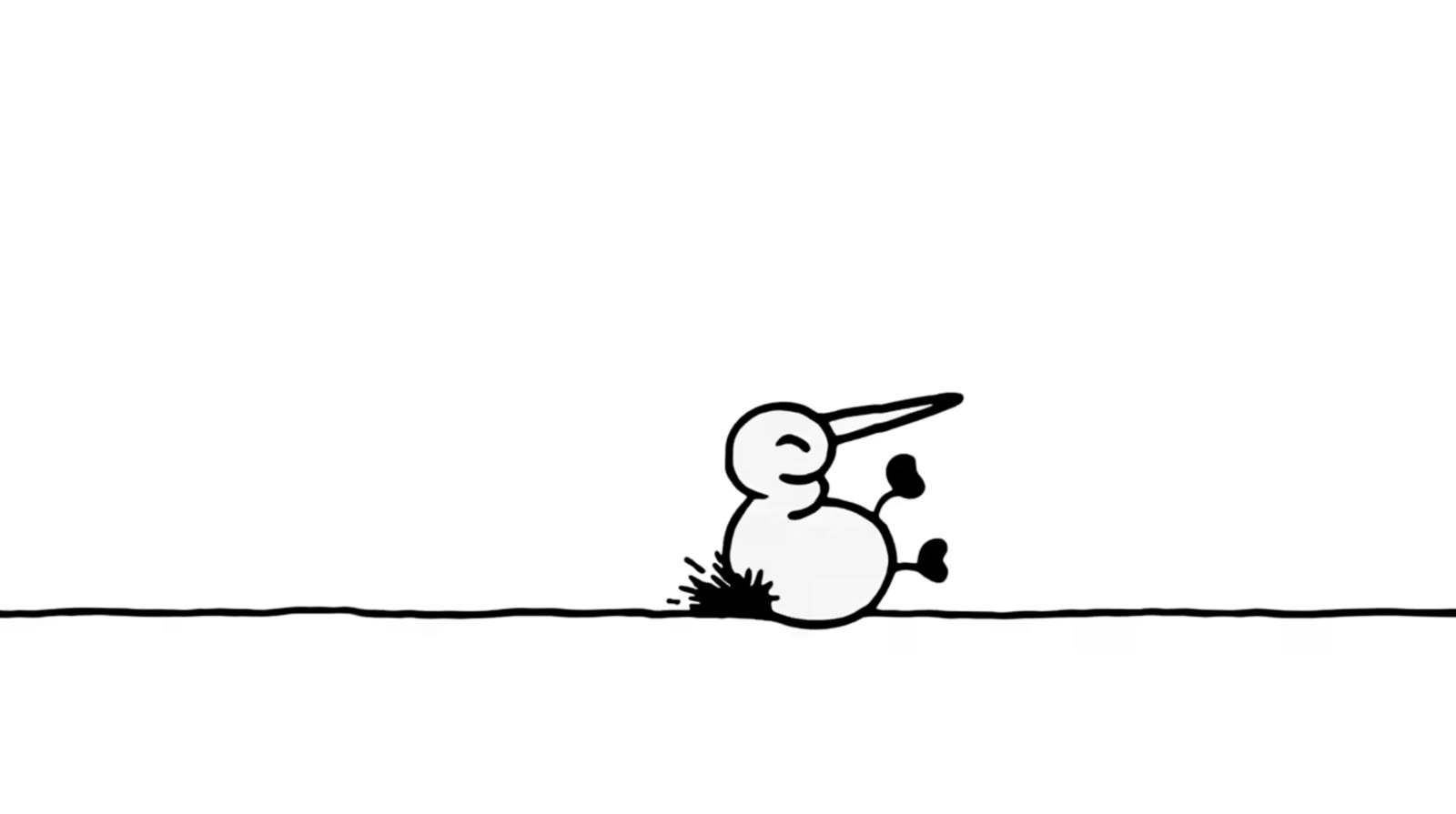
More effort, less return, and no apparent notice taken. That's something probably too many of you recognize.
Here's the piece I had backwards for years. Dopamine gets called the pleasure chemical, but the clearest work on it, much of it out of Kent Berridge's lab at Michigan, spent years pulling apart two things we experience as one: wanting and liking. They run on separate machinery, and dopamine is deeply involved in the first, much less so in the second.
So the spike arrives in anticipation, not on delivery. It fires on the way to the thing. And because the two systems are separate, repetition entrenches them. For many, this feeling amplifies overtime into a primary drive instinct.
You end up wanting something considerably more than you enjoy it. That reads as a strange sentence and lands as a familiar one.
Kiwi isn't chasing the flight anymore. It's chasing the dragon, a shadow of the bird it was earlier.
The Trainwreck
By the end Kiwi is a trainwreck. He's Just absolutely committed to getting that next fix. He has organized himself entirely around finding his next golden treat.You have probably seen poor individuals like this, many living on the street.
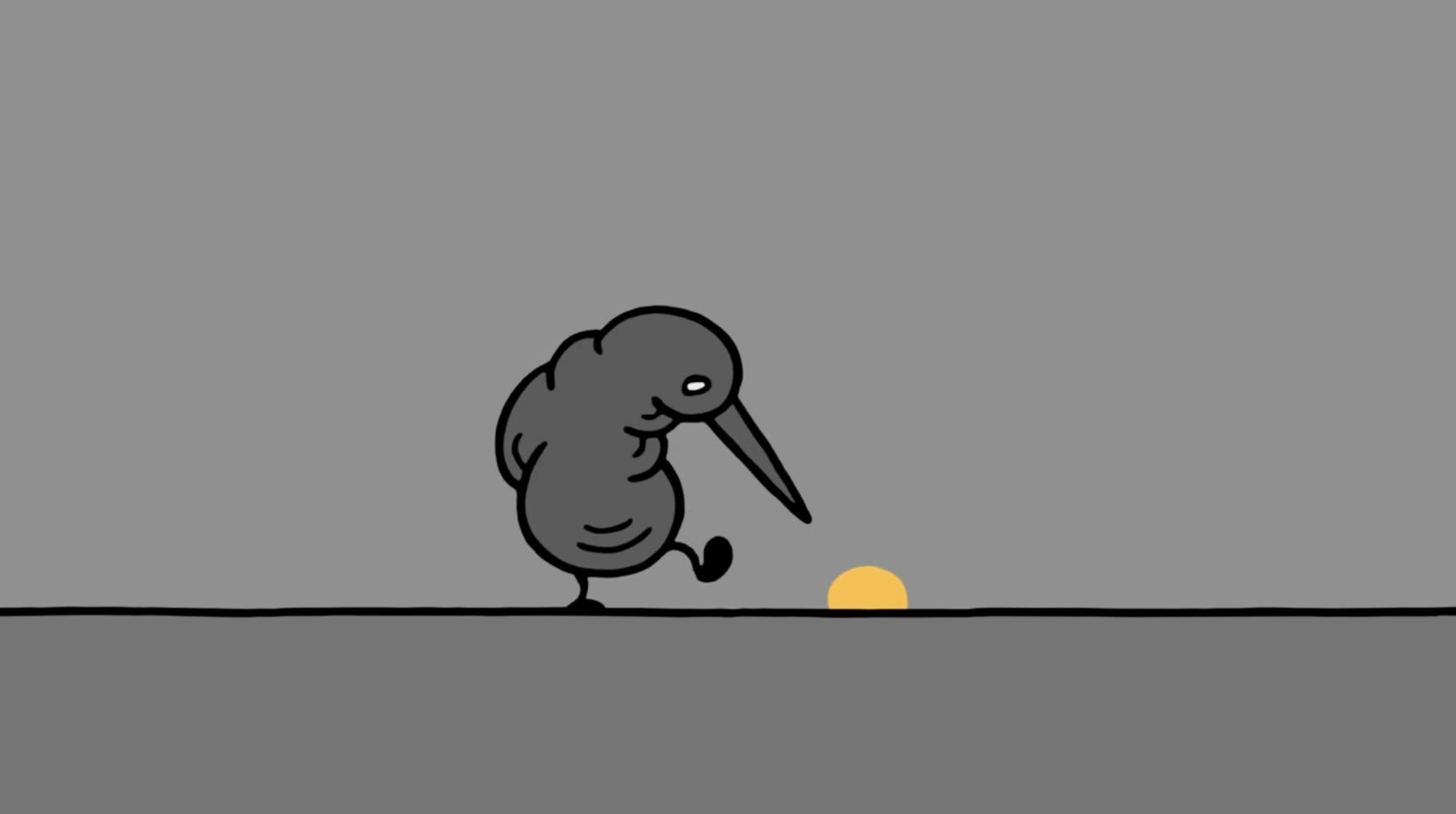
The version of this in a life is quieter and holds together on paper for a long time. For a long time you make the meetings. You go to work as usual. The day just quietly reorganizes around the part that comes after, and you're not chasing the great feeling anymore, you're topping up to reach ordinary, which used to be free.
From outside that reads as someone enjoying themselves too much. From inside it's maintenance. The whole distance between those two readings is where shame lives, and shame does damage of its own: it delays every honest conversation, and it recasts a mechanism as a defect.
There's no discipline organ. Nobody has a broken one. What Kiwi has, and what you have, is a reward system doing exactly what it evolved to do, pointed at something it was never built for.
The Scene the Film Doesn't Have
Nuggets ends at the bottom, and it's right to. That's where a lot of people stop.
But when people do get out, it almost never happens by wanting it less. The wanting is the part that doesn't take instruction. What changes is the distance between the reach and the thing — someone moves, or takes a job without a toxic culture, or ends up somewhere the supply isn't. Structure does what resolve couldn't.
That's the missing scene, and it's the one we're building. Not more willpower, which is finite and reliably at its lowest exactly when it's needed. Distance you set on purpose, while you're clear-headed, that's still there at 11pm when you aren't.
You decide once, at your strongest. The box holds the line through everything that comes after.
Everybody deserves to live by their best intentions instead of being run by the worst five minutes of their day. Nobody should need a lock to do it. About one in five of us does.